For a brief while at the turn of the twentieth century, a whiskey carrying the name of County Down's highest mountain travelled out from a small market town in the Mourne country. It was made — or at least bottled and sold — by two brothers named Mooney, and for a generation it was one of the better-known Irish whiskeys to come out of the region. This is the story of Donard Dew.
Named for the Mountain
The whiskey's proper name was St. Donard's, but it was known to nearly everyone as Donard Dew — almost certainly a nod to Slieve Donard, the highest peak in the Mourne Mountains, which looms over the Castlewellan countryside. The word “dew” was a poetic flourish common to Irish whiskeys of the era, in the same spirit as Tullamore Dew. Together the name conjured something local, elemental and a little romantic: the spirit of the mountain itself.
Merchants and Distillers
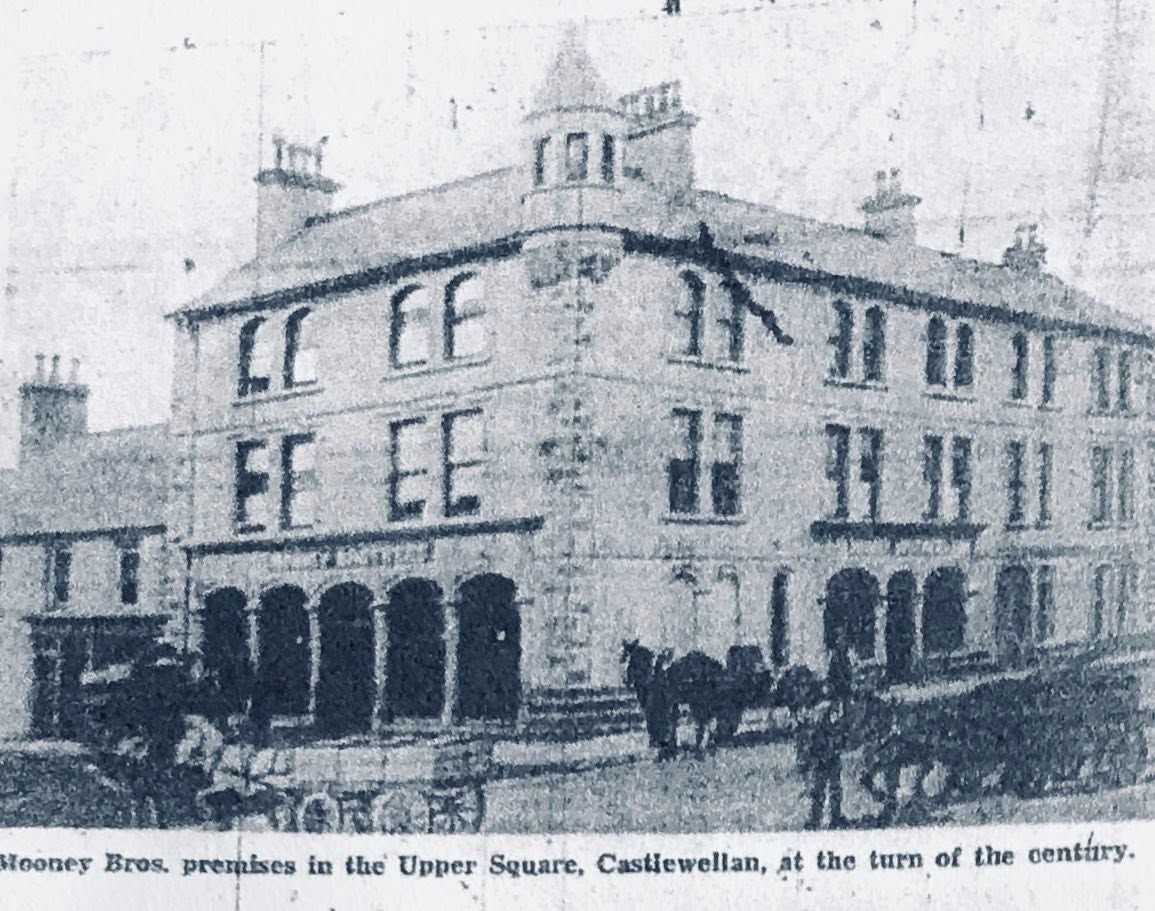
The Mooney family business was founded in Castlewellan in 1854 — a public house and an Italian grocery, the kind of well-stocked merchant's house that dealt in imported oils, wines and fine goods. The whiskey side was run by brothers Patrick and Hugh Mooney, who took on the distilling concern from their uncle. By the turn of the century Mooney Bros. was one of the largest such concerns in the region, producing several Irish whiskey brands — St. Donard's among the more popular of them.
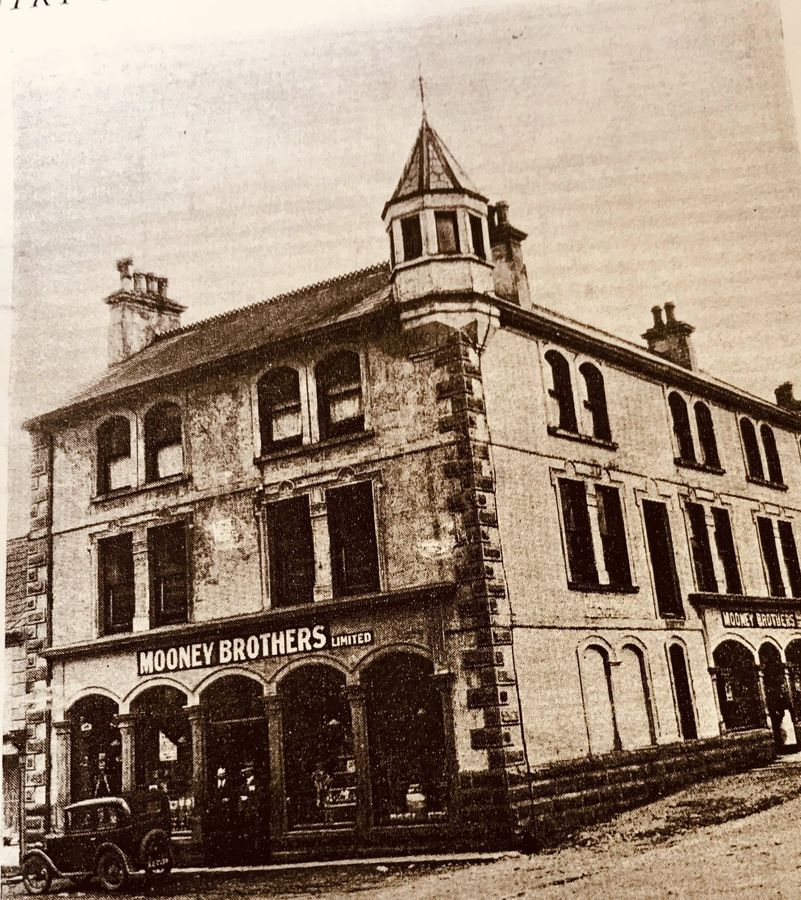
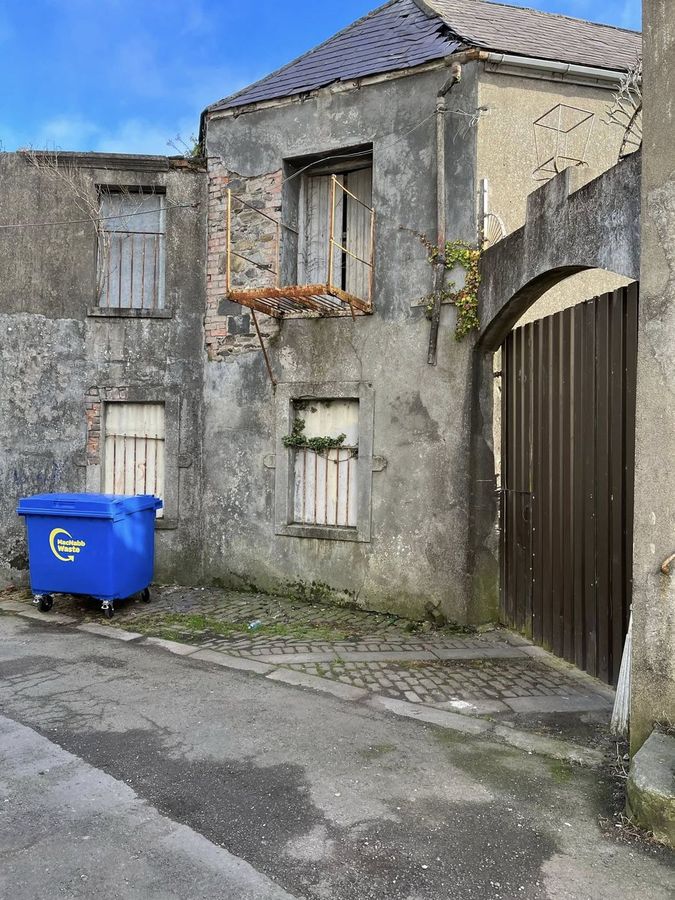
The operation reached well beyond the town. The brothers imported vast quantities of wine and spirits, sold them direct from the shop, and distributed them across Ireland. Donard Dew was poured in the bars of the Great Northern Railway and shipped in great quantity to markets overseas. The distillery itself, by local accounts, was tucked away in the yard behind the store.
Landlords and Benefactors
The Mooneys mattered locally for far more than the drink trade. From their uncle, Patrick McMullan, they inherited a substantial estate in South Down — close to a thousand acres spread across the townlands of Edenmore, Grinan, Clonlea, Cabra, Dundrine and Maghermayo. By the standards of the day they were unusually decent landlords. The Newry Reporter noted their generosity in both 1879 and 1892, when they granted their tenants rent abatements and free lime, and reckoned them among the best landlords in County Down. The tenants of Grinan were moved to raise an impressive cross at Clonlea in gratitude — a rare tribute for the time.
Their mark on the town is most visible in St. Malachy's Church. When the old church was to be rebuilt, there was a proposal to move it to a new site; the Mooneys used their influence to keep it on its historic ground — land their uncle had originally secured from Lord Annesley — and were among the most generous subscribers to its construction. The church still dominates the Castlewellan skyline today.
Neither Patrick nor Hugh married. Their inheritance and the business passed to their nieces and nephew, and through the turns of family fortune it came, in the end, to rest with their nephew.
“Exceptionally Fine and Mellow”
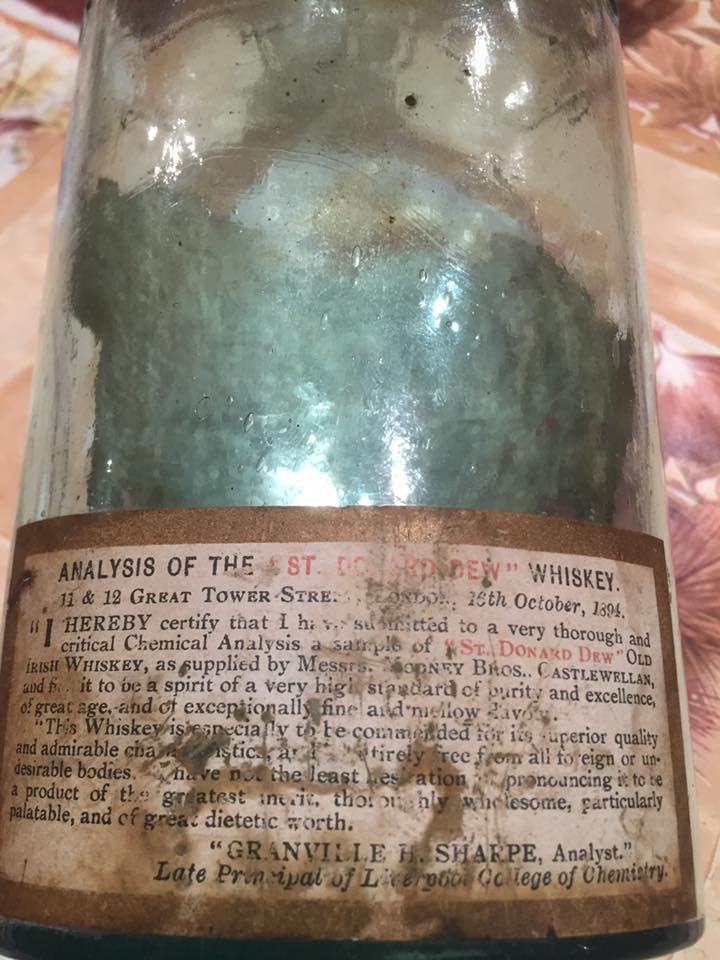
On 16 October 1894, from his offices at 11 & 12 Great Tower Street in London, the analytical chemist Granville H. Sharpe — late Principal of the Liverpool College of Chemistry — set down his verdict on a sample of St. Donard Dew supplied by Mooney Bros. of Castlewellan. His certificate was printed straight onto the bottle's own label.
I hereby certify that I have submitted to a very thorough and critical chemical analysis a sample of “St. Donard Dew” Old Irish Whiskey… and find it to be a spirit of a very high standard of purity and excellence, of great age, and of exceptionally fine and mellow flavour… a product of the greatest merit, thoroughly wholesome, particularly palatable, and of great dietetic worth. Granville H. Sharpe, Analyst · London, 16 October 1894
A chemist's certificate was no small thing in the late-Victorian whiskey trade. Adulterated spirits were a recurring public scandal, and an independent analysis was a powerful mark of trust — all the more persuasive when the spirit could be commended, in the language of the day, as “thoroughly wholesome” and even of “great dietetic worth.” It gave Donard Dew a reputable standing just as formal standards for Irish whiskey were taking shape.
Was Donard Dew distilled around here —
or did Mooney Bros. simply buy it in and put their name on it?
A Genuine Historical Puzzle
There is a real and unresolved question at the heart of the story: whether the Mooneys actually distilled their spirit on-site at all. Local historians have debated it for years without settling it. It would not have been unusual for a “distillery” of the period to be, in practice, a bonded merchant — blending and bottling whiskey bought in from larger producers elsewhere. The honest answer, for now, is that nobody knows for certain.
The Image That Outlived the Whiskey
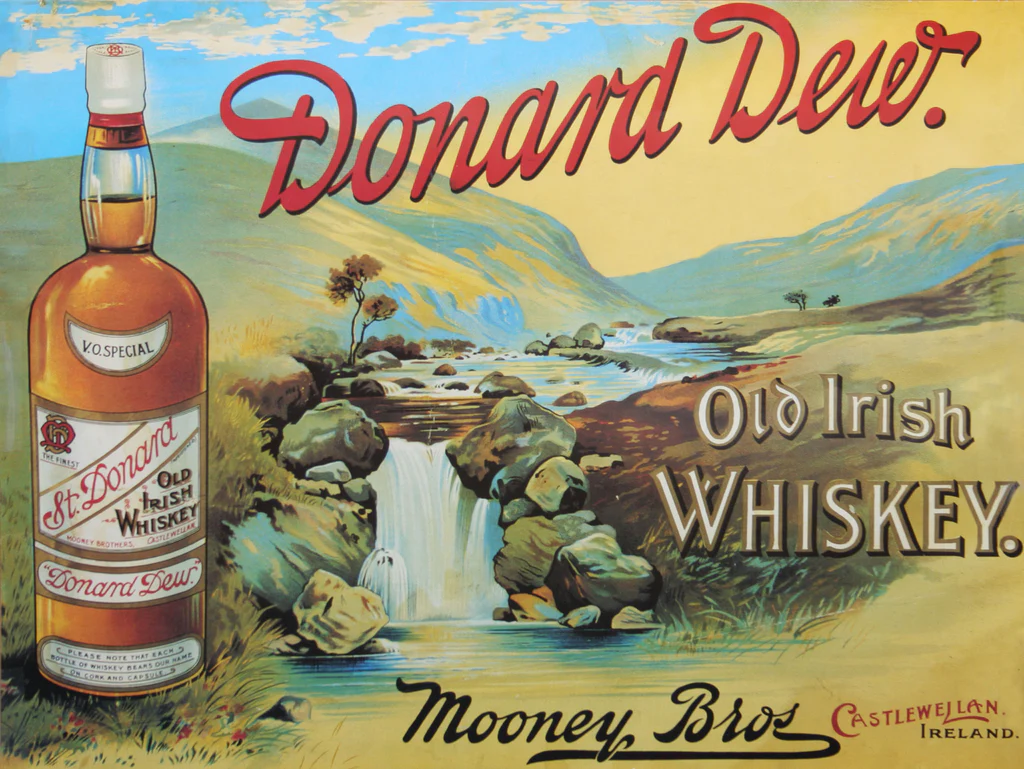
Donard Dew is best remembered today not by taste but by sight — through a striking advertising poster from around 1906. It shows a bottle of St. Donard's Old Irish Whiskey set against a Mourne landscape of mountain and falling water, naming Mooney Brothers of Castlewellan as the stockists. The artwork was created by William Strain & Sons of Belfast & London, a printing and publishing house active around the turn of the century. Reproductions of that poster are still widely sold today as Irish pub décor — which is, in no small part, why the name endures. If you would like one for your own wall, a handful of independent Irish shops still print it, among them Old Irish Posters, Gaelic Art and Vintage Irish Posters.
It also lives on, framed, on the walls of pubs that treasure a piece of local history. Two that keep it on display today are the Parador Bar on Belfast's Ormeau Road and the Minerstown Tavern, in its small County Down village. And we're mapping every pub where the poster still hangs.
Prized for Its Rarity
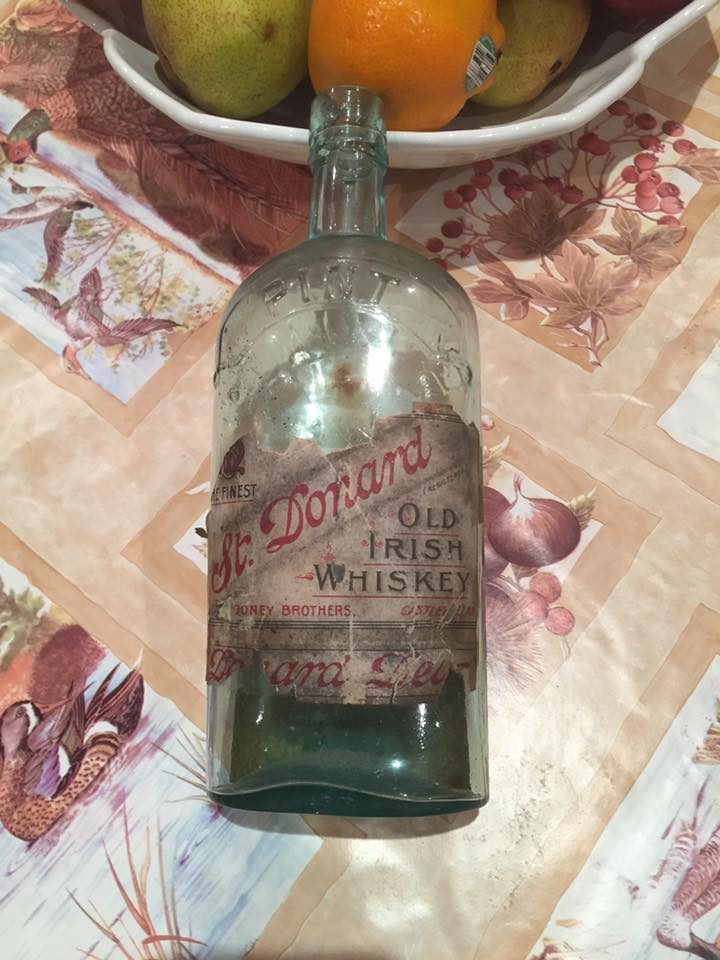
Collectors are honest about the whiskey itself: it is not remembered as anything especially remarkable in the glass. But very few bottles of Donard Dew survive, and that scarcity alone keeps it on many a collector's grail list. Should you ever find a sealed bottle in an attic somewhere in County Down, it is worth far more for its rarity than for its drinking.
Swept Away
The brand did not survive the upheavals that gutted the Irish whiskey industry in the early-to-mid twentieth century. Prohibition in the United States, the Anglo-Irish trade war, the loss of Commonwealth markets, and the rise of Scotch together wiped out dozens of small Irish distillers. Mooney Bros. was among the casualties.
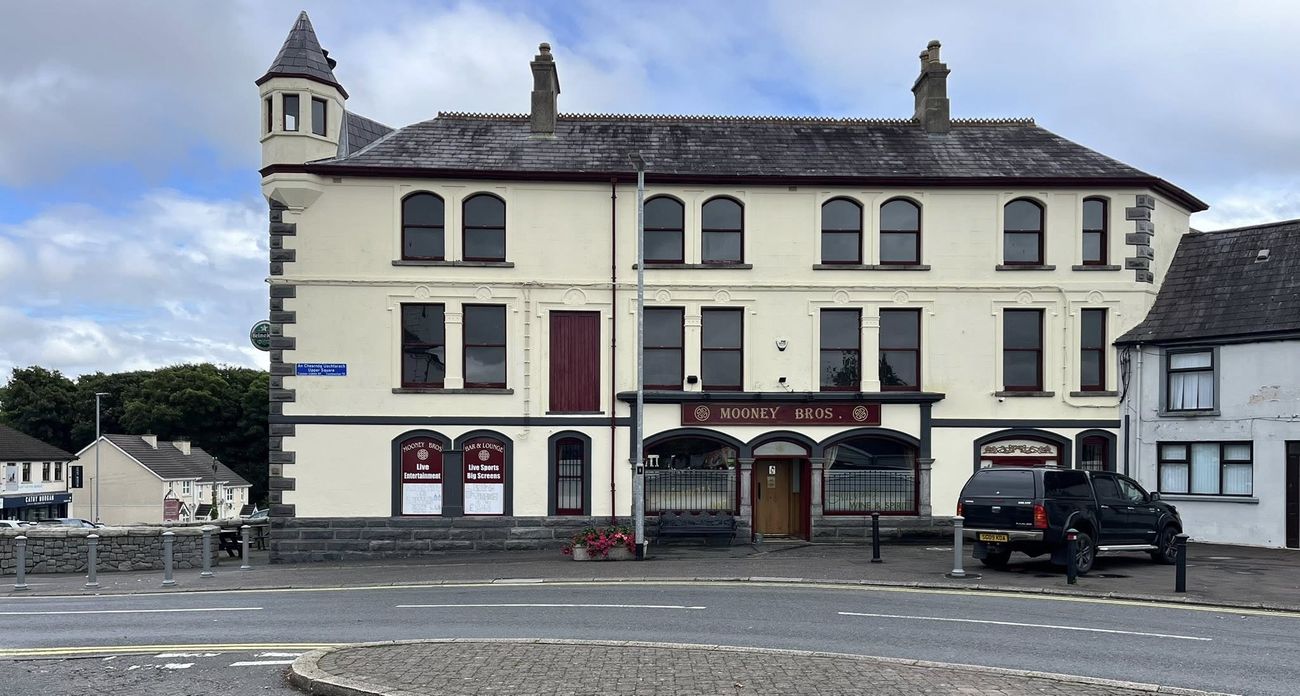
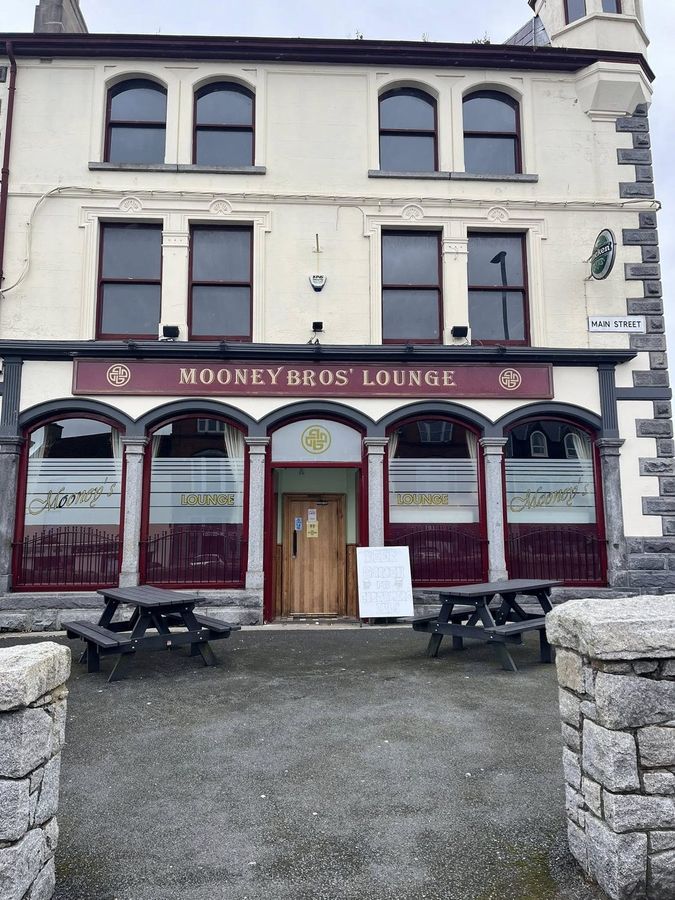
Castlewellan today has no working distillery. But the grand building in Upper Square still stands and still carries the Mooney Brothers name — now in the hands of Colm Magorrian, who runs it as a popular bar. The poster, the mountain, and the memory of Donard Dew remain.